

Mayberg Connects Practitioners to Build a Common Framework for Jewish Identity and History Education in K-12 Schools
/By Naftali Ejdelman, Senior Program Officer
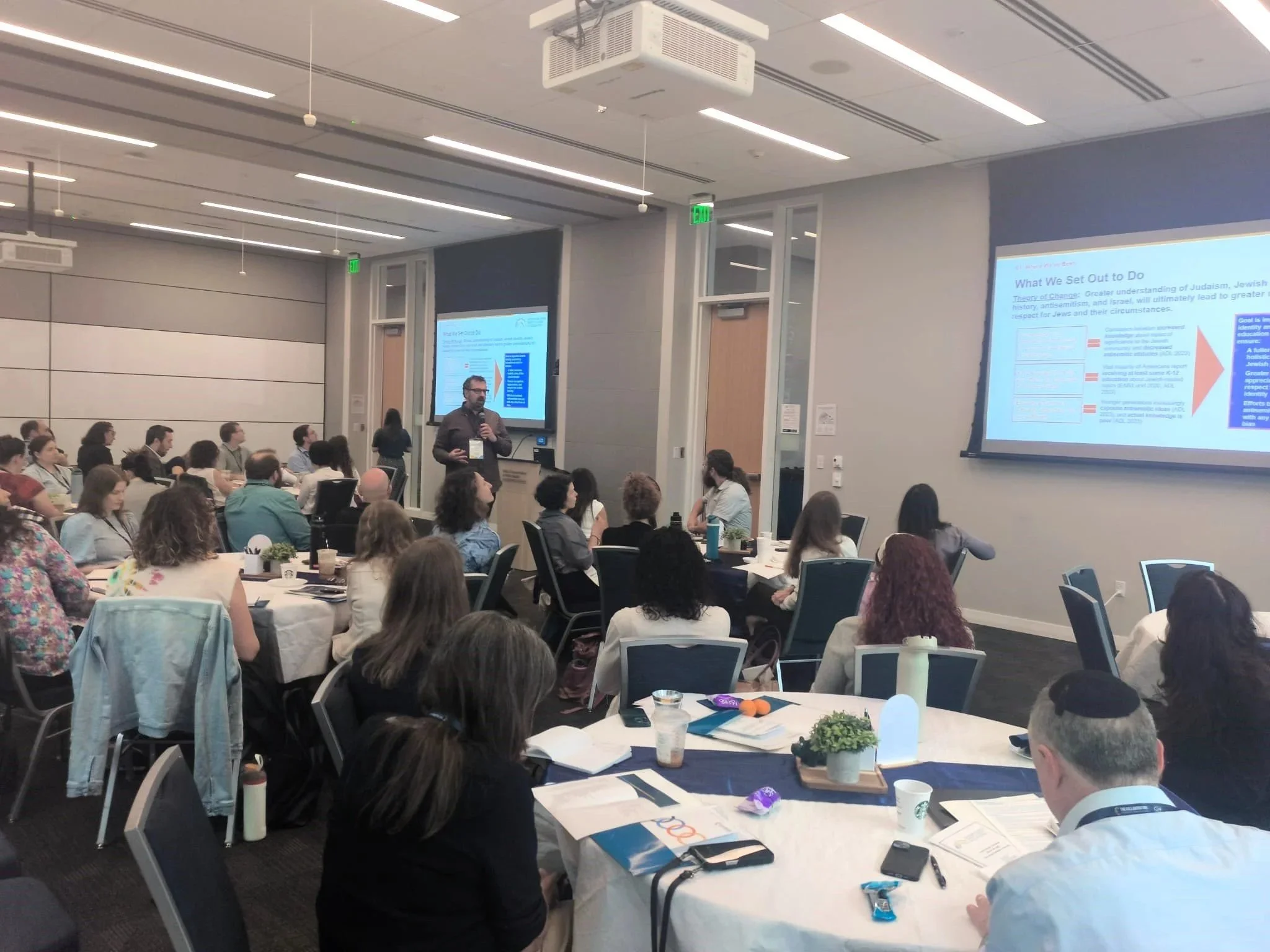
The Collaboratory Co-Director Ben Jacobs, Ph.D., addresses Network members gathered to develop a shared K-12 curriculum on Jewish history and identity
On July 27-29, the Network for Jewish Identity and History in K-12 Education gathered for its annual convening at George Washington University's Graduate School of Education and Human Development, hosted by The Collaboratory: A Center for Jewish Education, of which the Mayberg Center is a part. Their focus: how to teach Jewish history and identity at a moment when the obstacles are growing more formidable.
Crowded curricula leave little room to teach about Jewish history and identity at all in K-12 schools, public and non-Jewish private alike; states with Holocaust education mandates have no enforcement mechanism; and a full third of teachers in these schools have never met a Jewish person, entering the classroom with no personal frame of reference for the subject. Meanwhile, antisemitic incidents in K-12 schools have risen sharply in recent years as adversaries such as Qatar and China fund school districts across the country, anti-Israel groups offer professional development, and students absorb antisemitic and anti-Israel content on social media.
The Network for Jewish Identity and History in K-12 Education, which is mainly funded by the Boston-based One8 Foundation, brings together educational content providers, advocacy groups, professional development practitioners, and Jewish communal organizations — including Mayberg Foundation partners JCRC of Greater Washington and OpenDor Media, and extended-network members like Facing History and Ourselves (a DEEP Consortium member).
While the external obstacles are considerable, the Network has successfully fostered collaboration among its members internally, despite competition for funding and clients. Its working groups have produced a Comprehensive Framework for Teaching Jewish History and Identity in K-12 Schools, broken down by grade level and mapped to state standards, along with an AI tool that assesses content for alignment with the Framework.
For the Mayberg Foundation, the initiative also validates an approach we return to across our portfolios: strengthening a field by connecting its practitioners. The Network for Jewish Identity and History in K-12 Education joins several other professional networks that we support: the DEEP Consortium, which unites professional development providers for Jewish day schools; the JFN Day School Affinity Group, where we are a founding member; and our Jewish Outreach Professional Development initiative. Lasting change comes when people doing parallel work find each other, develop shared standards, and let shared goals overcome organizational competition.