

Navigating Grantmaking Through a Torah Lens: Jewish Foundation Professionals Reflect on Mayberg Foundation’s Shared Learning Series
/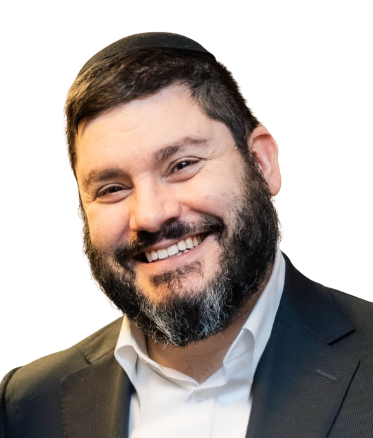
Rabbi Yehuda Chanales: "Learning Torah together...reinvigorates [foundation leaders’] mission and their passion for what lies at the core of their work"
Over the past few weeks, colleagues from across the Jewish philanthropic world joined the Mayberg Foundation team for a three-part professional learning series, Navigating Grantmaking Challenges through a Torah Lens, designed and facilitated by Rabbi Yehuda Chanales, founding director of Lifnai Vlifnim, a Mayberg Foundation partner. The series initially began as something more personal: Rabbi Chanales had offered to learn one-on-one, in chavruta, with our Executive Director, Todd Sukol.
"The Mayberg Foundation has invested in Lifnai Vlifnim for several years now, and I've seen firsthand how powerful their approach to Torah study can be. When Rabbi Chanales offered to learn with me one-on-one, I realized this was something too valuable to keep to myself — I wanted our team to have that experience, and our colleagues and peers across the field as well," Todd shared. Beyond our own staff and partner organizations, the series drew participants from across the Aronov Foundation, Kopelman Foundation, Lippman Kanfer Foundation, Naomi Foundation, Natan Fund, Samis Foundation, William Davidson Foundation, and Zalik Foundation — making for a rich conversation with diverse perspectives about the spiritual and interpersonal dimensions of grantmaking work.
Each session followed Lifnai Vlifnim's core framework for text study, guiding participants through three questions: מה בו / Mah bo — what's happening in the text?; מה ליבו / Mah libo — what's at the heart of the text, its essence?; And מה לי בו / Mah li bo — what is the text saying to me? This progression from the literal, to the essential, to the personal gave the group a consistent structure for turning ancient text into present-day reflection on their own leadership and work.
The series opened with Eicha Esa Levadi – Loneliness and Responsibility in Klal Work, using Moshe's isolation as a communal leader to explore how delegation, distance, and awareness of Hashem's involvement can shift our relationship to the weight of leadership. The second session, VaEtchanan – Request Denied: Saying "No" to Say "Yes", used Moshe's tefillah (prayer) to enter Israel — and G-d's refusal — as a lens for making requests, receiving them, and holding boundaries, and for applying those lessons to real grantmaking situations. The series closed with Al Kein Ochil: Fostering Hope and Optimism in a Cynical World, which named the tension at the heart of foundation work — believing in a brighter future while working in a world that breeds cynicism — and used a story about Rabbi Akiva and his rabbinic colleagues to explore how to hold onto reality without losing hope.
Reflecting on the series, Rabbi Chanales noted that Jewish foundation professionals and lay leaders often wrestle with the same questions as they try to bring the change they envision into the world. "Learning Torah together as a way to more deeply understand their own values, and each other's, can bring a renewed sense of confidence and connection," he said. “It reinvigorates their mission and their passion for what lies at the core of their work, and for the unique role Jewish values play in shaping it.”
Participants echoed that sentiment in their own reflections on the series. Attendees valued the chance to bring "age-old wisdom and tradition into our current roles," and noted how meaningful it was to "apply Torah wisdom to our field in particular" rather than in more general contexts. One participant reflected that it was "nice to step out of the day-to-day and look at our historical case studies [and] texts for general and specific guidance," while another praised how the thoughtful questions pushed the group to see familiar issues in new ways. Several also pointed to the value for grantee relationships, noting that the framework could help shift power dynamics by reinforcing that everyone involved is "learners, teachers, and students" together.
Given the enthusiasm this series generated, Todd is already looking ahead. "I'm excited to keep offering learning opportunities like this one," he said. "Our work as foundation professionals is meaningful, but it's not always easy — and I want our team and our colleagues to have the kind of intellectual and spiritual grounding that Lifnai Vlifnim's approach to Torah wisdom can provide as they lead their organizations. I am also grateful to our colleagues at other foundations who joined us and brought their own perspectives to the table — this kind of learning is only richer for it.”
To engage your organization’s team in Lifnai Vlifnim’s reflective Torah learning, contact Rabbi Yehuda Chanales at yehuda@lifnaivlifnim.org. Subscribe to Lifnai Vlifnim's email list to get Torah content and program updates here.